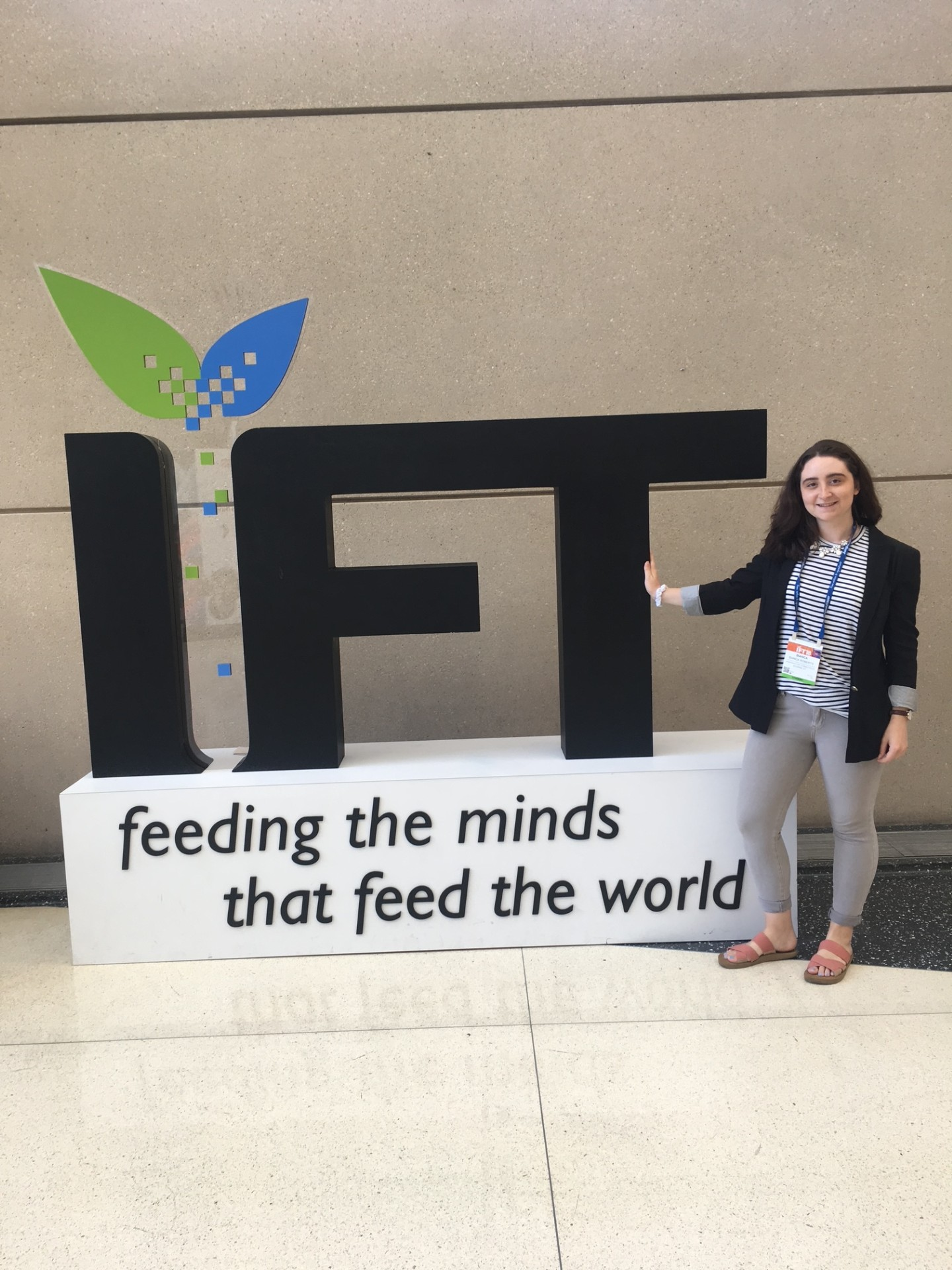

In this interview, our APAC Implementation Specialist and allergen expert, Nicki Shwe Yee, talks about how growing up in Myanmar shaped her career, her research on allergen management and becoming a World Food Forum ambassador.
Hi Nicki, can you tell us what started your interest in the food industry?
I’m originally from Myanmar. Food is the backbone of my country and its economy. But while Myanmar is agriculture-oriented, food insecurity is a major challenge. In 2025 the UN reported that about one third of the population was facing it. So that was the reality that I grew up with. It taught me that agriculture isn't just about producing food, it's also about community, systems, equity and resilience.
My dad played a big role in shaping this perspective. He studied postgraduate studies in plant and seed management in Italy when I was very young. Then he came back and pretty much established a farmer training school with South Korean missionaries in my country. That really showed me how food and agriculture are connected to community.
"Growing up in Myanmar taught me that agriculture isn't just about producing food, it's also about community, systems, equity and resilience.
Then, when I had the chance to do my bachelor's in South Korea at Seoul National University, I naturally sort of gravitated towards food science and biotech. It was the perfect way to combine my passion for science with a mission and to really improve food systems and health outcomes. So that's it essentially in a nutshell.
You have a background in food allergens and clinical immunology. Can you talk about that?
After my degree, I moved to South Africa and ended up getting a job at a food and allergy consulting and testing company, which, while small, was an industry leader, with an in-house accredited lab.
That's really where I started my career. I was seconded to a major national retailer in South Africa and looked after their consumer assurance programs and food safety. So, I worked with a lot of food technologists.
Because I was employed by the food allergy company, who ran industry workshops in allergen management, I always had that added insight. I assisted on a lot of the labelling whenever I had time.
Then when I moved to Australia about seven years ago, I thought this is my time to actually pursue my PhD. Because I had worked for an allergy company, it was natural for me to do research on peanut allergies. It’s a very common food allergy for children in Australia, affecting I think around 3 % of the children under the age of 12 months.
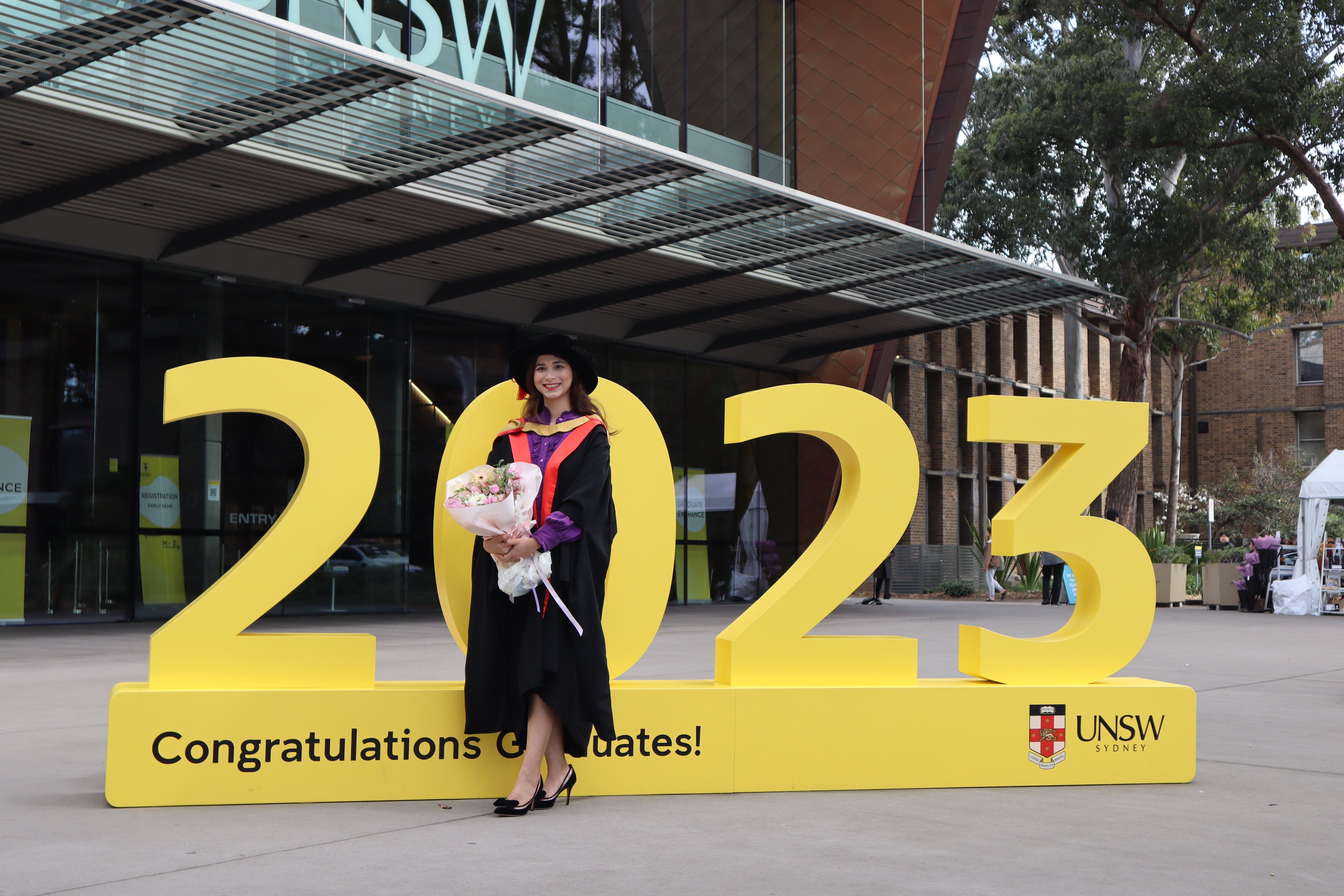
My four-year research project was on the Molecular Study of Peanut-Specific IgE and IgG4 Epitope Repertoires in a Novel Peanut Oral Immunotherapy (OIT) with a Modified Dietary Fibre Supplementation – at the intersection between food science and clinical immunology.
While I was doing my PhD, I also did a couple of papers focusing on a more industry focus, looking into allergen labelling in Australia on imported products.
I covered the industry standard, the industry framework, the allergen framework and the management frameworks.
Can you tell us a bit more about your PhD?
In very simple terms, my research looked at what would happen on a molecular level when peanut allergic individuals – specifically adolescents, between seven and 12 – would undergo oral immunotherapy. They essentially went through a clinical trial being given small doses of peanuts over 13 and a half months to help them build tolerance.
What was really unique about the study was that it was not just a normal peanut oral immunotherapy. We worked with a group of adolescents that were given peanuts plus modified dietary fibre – because dietary fibre is shown to influence gut health, which obviously plays a big role in immune responses.
So, we looked at what happens in these different patient groups that are going through oral immunotherapy. And then my main goal in my project was to find smarter ways to understand and predict how these patients would react to the treatment, like the oral immunotherapy.
The aim was to explore how allergen therapies can become more personalised and reliable in the future. I then specifically, looked at the immune responses of these peanut-allergic adolescents and how they change over that period of time and whether these changes and these antibody changes could predict – or even correlate – if they're getting better or if they're not getting better essentially and their clinical outcomes.
"The aim was to explore how allergen therapies can become more personalised and reliable in the future.
We did this clinical trial in Australia and I'm still collaborating with my PhD supervisor. The results are being published this year, but it should help build the foundation for the next generation of food allergy dynamics.
And how does this all fit into your role at Foods Connected?
My role at Foods Connected offered me a really exciting opportunity to help implement tools that help different businesses manage their quality compliance and supply chain traceability.
It's a space, that really resonates with me. Being part of that shift towards digitisation means I’m contributing to the future of the food industry rather than just being reactive.
Do you think that there is enough attention on allergen management at a legislative level?
No, I wouldn't say so. I think the biggest challenge is the fact that food allergen labelling is not widely regulated around the world. In South Africa, you do have to declare allergens and there’s an actual regulation to do so.
In Australia, even though we are really far ahead with allergen labelling, it is still not really legislated on, so it’s still a bit of a grey area. But you do have voluntary organisations like the Allergen Bureau, whose advice and guidance many large companies actually implement in their manufacturing spaces.
But if you look at imported products – an area I’ve also written papers on – there is no way you can control the standard of allergen labelling or regulate it to the same level as Australian-made products. So how do you handle that?
"Being part of that shift towards digitisation means I’m contributing to the future of the food industry rather than just being reactive.
Just as an example, when I told my dad I was doing my PhD in peanut allergies, he asked me why. In Asia the prevalence is so low – you don't really hear about food allergies. So it is important to educate people not just manufacturers, but consumers too.
I would say it's a huge area to work on. The FAO (The Food and Agriculture Organisation) taskforce is doing a great job coming up with all these guidelines and it's all really science-based. There just needs to be more of a harmonised approach – it is a life-threatening situation after all.
Last year you were a World Food Forum youth representative. How did that come about?
In 2024, I actually visited the FAO headquarters in Rome, because a family friend happened to be working there. It really made me appreciate the scale and scope of the work they are doing to transform food systems – and it inspired me to find a way to contribute beyond my job on a global level. So when the World Food Forum put a call out for application for the youth representative program, I thought, you know, I'm just going to apply.
I was able to attend the World Food Day event at the FAO office online in October. But all the sessions I've attended have been so inspiring, driving change across multiple platforms, looking at everything from policy and education to sustainability and innovation. And it's not just ideas, it's the action and the collaboration that really reminded me why it's so important. I saw that when young people come together, they can problem solve. And that's so powerful.
And what has been your proudest or most accomplished moment of your career so far?
For me, it's having been given the opportunity to have that diversity in terms of my career journey. Not just in academic research, but in industry and now helping move digitisation forward across different countries. And then there's my PhD – I've always wanted to get a PhD before I turned 30 and I did.
Each chapter has taught me something new and obviously shaped how I dealt with the challenges that have followed. My career so far has taught me to never be scared of problems. Today I love to problem solve – and that for me is the biggest thing.
And finally, tell us something that not many people would know about you.
Well I'm a big foodie – I try everything – but the one thing I don't eat is peanut butter. I just really don't like it. Considering my area of research it's hugely ironic I know. My husband laughs at me, he's got a lot of intolerances, so he doesn't eat dairy or sugar, but he would eat peanut butter all day and I just can't stand it!
.jpg)
Greer McNally
Greer has over 15 years’ experience writing about trends in the food and retail sectors. She lives in a little village by the sea in Northern Ireland and loves creating content that informs how people think about the food industry. A recent career highlight was interviewing the legend that is Dr Temple Grandin.
.png "Protein Procurement What You Cant See, What Its Costing, and How to Fix It (7)")
Browse Posts
/Blog%20Headers/shutterstock_1927957907%20(1).jpg)
/Blog%20Headers/shutterstock_2474442759.jpg)
/Blog%20Headers/shutterstock_1845178195%20(2).jpg)
/Blog%20Headers/shutterstock_2133827717%20(1).jpg)




- October 2026
- September 2026
- August 2026
- July 2026
- June 2026
- May 2026
- April 2026
- March 2026
- February 2026
- January 2026
- December 2025
- November 2025
- October 2025
- September 2025
- August 2025
- July 2025
- June 2025
- May 2025
- April 2025
- March 2025
- February 2025
- January 2025
- December 2024
- November 2024
- October 2024
- September 2024
- August 2024
- July 2024
- June 2024
- May 2024
- April 2024
- March 2024
- February 2024
- January 2024
- December 2023
- November 2023
- October 2023
- September 2023
- August 2023
- July 2023
- June 2023
- May 2023
- April 2023
- March 2023
- December 2022
- November 2022
.png)
.png)
.png)
.png)
.jpg)
.png)
/Blog%20Headers/James%20Hennessy%20(1)%20(3).png)