
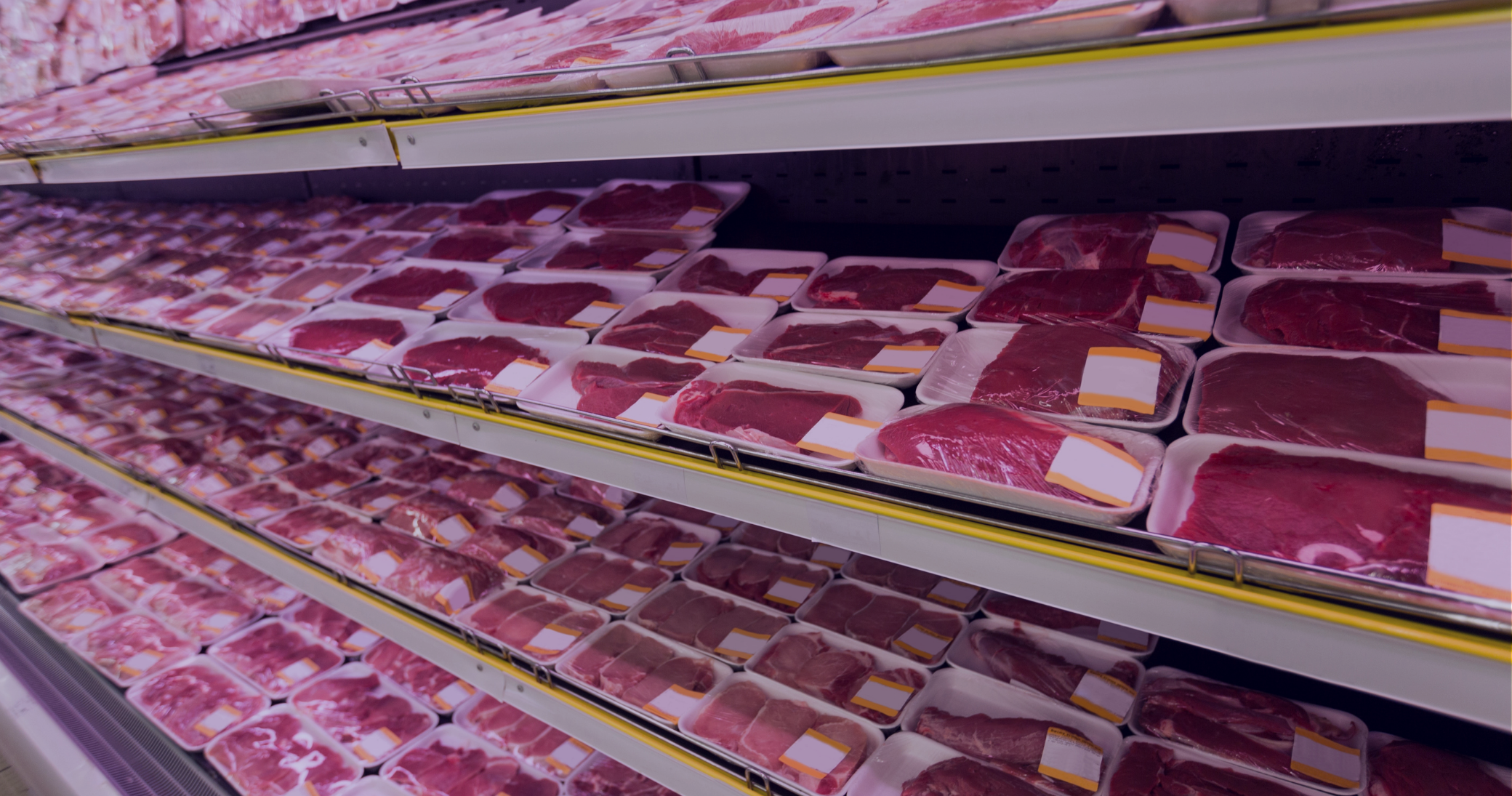
Most protein businesses aren’t short on data. Between specs, claims, invoices, market reports, and forecasts, retailers and manufacturers already generate more information than any team has time to review. The problem isn’t volume. It’s timing, and it’s costing both sides of the protein supply chain real money, quietly, every single day.
A price gets checked by phone instead of pulled automatically. A spec gets confirmed by email instead of a shared system. A market signal shows up in a report days after it actually mattered. None of that looks like a crisis in the moment. But add it up across a full category or a full production run, and a lag that seems trivial on any single SKU turns into a real number on a P&L.
Protein procurement has a data visibility problem
Here’s a distinction worth thinking about: having data and being able to act on it in time are two different things. If a cost, a risk, or an opportunity doesn’t surface until after the decision it should have informed has already been made, it doesn’t matter how much data was sitting in a system somewhere. It never actually helped anyone.
That’s the pattern across protein procurement right now. Specs, pricing, yield performance, and market signals all exist. What’s missing is the ability to see them change in real time, on both sides of a relationship, rather than finding out weeks later in a report nobody had time to read.
What poor data visibility actually costs in protein procurement
Here’s a number worth sitting with: a yield swing of just a few percent, the kind that goes completely unnoticed under a standard fixed-price contract, can easily be worth millions a year to your business.
That’s not a rounding error. It’s a line item nobody is tracking, because the system that would surface it doesn’t exist yet. And it cuts both ways. A retailer has no way to check whether a supplier’s stated cost still reflects reality. A manufacturer has no way to prove it when their actual performance beats the assumptions baked into a fixed price years earlier.
Why real-time visibility matters in protein supply chains right now
Protein has always been exposed to volatility. What’s changed is the speed of that disruption and the ripple effect impact it has.
Bringing it to life, feed grain markets are global, so a shock on the other side of the world can move the cost of finishing a herd or a flock within days. Climate-driven drought has pushed the U.S. cattle herd to its smallest size in roughly 75 years, a supply shift that took years to build and could take years to unwind. Disease events in poultry can remove a double-digit share of a category’s production in a single quarter, faster than almost any procurement team’s normal planning cycle.
The structural problem all three of those scenarios create: supply in protein responds slowly, because you can’t grow a herd or rebuild a flock any faster no matter how urgently the market needs you to. Price responds fast, because markets move on expectation long before physical supply changes. A data lag that used to be a minor inconvenience in a slower-moving market becomes a genuinely expensive miss once the gap between “slow supply” and “fast price” widens as much as it has.
How data visibility improves protein procurement across the supply chain
None of this requires more data collection. It requires the data that already exists to reach the people making decisions with it, automatically, as it changes.
For a retail category owner, that looks like:
● Seeing cost and quality pressure build before it hits a purchase order, not after
● Comparing supplier performance on real numbers instead of last year’s impression
● Checking a market forecast against what actually happened, in time to act on the difference
For a protein manufacturer, it looks like:
● Planning production against retail demand signals that can actually be trusted
● Having a system-based way to prove genuine cost or yield under or over-performance
● Turning strong, consistent quality into a case for more volume, not just fewer claims
The visibility gap here is shared, which means closing it is too.
The bottom line on data visibility in protein procurement
Protein procurement teams don’t need to generate more information. They need the information that already exists to move at the speed the market now moves. That’s a solvable problem, and it’s one worth taking seriously before the next shock, not after it.
Developed by industry experts with over thirty years' experience in managing complex protein procurement supply chains, the Foods Connected platform has been built to solve the exact challenges covered throughout. So, if this is a pattern your team is living with right now, book a demo today.
Want to ensure transparent, real-time data to bolster your protein procurement strategy ? Book a tailored demo of Foods Connected today.
/Resource%20%20Blog%20CTA%20Graphics/Resource%20%20Blog%20CTA%20Graphics/supply-chain-resilience-blog-demo-cta.png?width=1200&height=525&name=supply-chain-resilience-blog-demo-cta.png)

Foods Connected team
The Foods Connected team of experts all come from industry and are specialists in food safety compliance, strategic sourcing, traceability and animal welfare.
.png "Protein Procurement What You Cant See, What Its Costing, and How to Fix It (7)")
Browse Posts
/Blog%20Headers/shutterstock_1927957907%20(1).jpg)
/Blog%20Headers/shutterstock_2474442759.jpg)
/Blog%20Headers/shutterstock_1845178195%20(2).jpg)
/Blog%20Headers/shutterstock_2133827717%20(1).jpg)





- October 2026
- September 2026
- August 2026
- July 2026
- June 2026
- May 2026
- April 2026
- March 2026
- February 2026
- January 2026
- December 2025
- November 2025
- October 2025
- September 2025
- August 2025
- July 2025
- June 2025
- May 2025
- April 2025
- March 2025
- February 2025
- January 2025
- December 2024
- November 2024
- October 2024
- September 2024
- August 2024
- July 2024
- June 2024
- May 2024
- April 2024
- March 2024
- February 2024
- January 2024
- December 2023
- November 2023
- October 2023
- September 2023
- August 2023
- July 2023
- June 2023
- May 2023
- April 2023
- March 2023
- December 2022
/Blog%20Headers/SEO_How%20meat%20processors%20can%20optimise.jpg)

.png)
/Blog%20Headers/shutterstock_2360370381.jpg)
/1.%20HubSpot%20Images/procurement%20forecasting%20tool%20ipad%2022-1.png)
.png)
.png)
/Blog%20Headers/shutterstock_1550290670.jpg)
.png)